
If you have searched what is a reverse bathtub, you may have noticed that the answers are all over the place. That is because “reverse bathtub” is not a standard residential bathroom term with one universally accepted meaning. Depending on where you saw the phrase, it can refer to a specific bathtub product, a reversed fixture configuration, or a construction waterproofing concept that has nothing to do with bathing.
For homeowners planning a remodel, the important part is understanding the tub’s actual design, drain location, plumbing requirements, size, weight, and how it will fit the room.
A Quick Way to Make Sense of the Term
- A reverse bathtub is not a recognized category like alcove, freestanding, drop-in, soaking, or walk-in tubs.
- Some manufacturers use “reverse” as part of a specific product or model name.
- In remodeling conversations, people may use the term informally for a tub with an opposite fixture orientation.
- Civil engineering also uses bathtub-style language for waterproofed excavations designed to keep groundwater out.
- A reverse bathtub is not the same as a bathtub-to-shower conversion or shower combination.
- Choose a tub from its specifications and rough-in requirements, not from the product name alone.
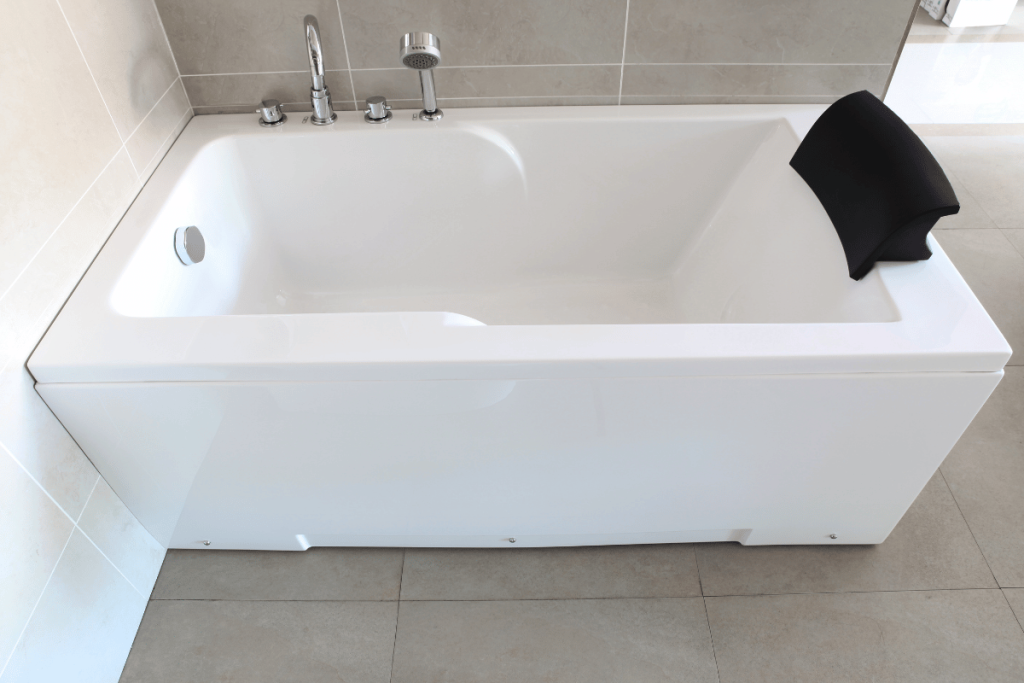
What Does “Reverse Bathtub” Actually Mean?
In a residential bathroom, the phrase needs context. There is no single industrywide product design called a reverse bathtub.
One real example is the Waterworks .25 reverse freestanding oval bathtub. It is a 70-inch by 40-inch by 29-inch freestanding, single-ended soaking tub with an end drain and overflow opening. Waterworks also sells a standard .25 freestanding oval bathtub, showing how “reverse” can function as a model distinction rather than a separate bathtubs category.
If a showroom listing, designer, or contractor uses the word “reverse,” ask what exactly is reversed in that model. Do not assume it automatically describes the drain style, bathing position, faucet placement, or base design.
| Where You See the Term | What It Usually Means |
|---|---|
| Bathtub product listing | A manufacturer-specific model or configuration |
| Bathroom remodel discussion | Informal reference to an opposite fixture orientation |
| Civil engineering | A waterproofed below-grade structure that keeps water out |
| Tub-to-shower project | Usually a different concept entirely |
Why Does the Term Also Appear in Construction?
In civil engineering, a “bathtub” can describe a below-grade structure protected against surrounding groundwater. Waterproofing membranes, slurry walls, concrete systems, and other impermeable barriers may be used around excavations to exclude groundwater and resist hydrostatic pressure.
The idea is the reverse of an ordinary household tub: a bathroom tub holds water inside, while below-grade waterproofing is intended to keep water outside the protected structure.
That meaning is useful to know, but it should not influence the bathtub you choose for a home.
What Should You Check Before Buying a Tub With a “Reverse” Label?
If what is a reverse bathtub brought you here because you are shopping for a fixture, focus on the installation details.
Confirm the Drain and Overflow Location
The drain needs to line up with the planned plumbing or be reasonably reachable during the remodel. Moving a drain can require opening the floor and altering piping. The overflow drain location also affects positioning and service access.
Measure the Tub and the Room Separately
A 60-inch alcove tub and a 60-inch freestanding tub do not use space the same way. Freestanding tubs need practical clearance for cleaning, faucet access, and movement.
Measure doorways too. A tub that fits the floor plan but cannot pass through a hallway or bathroom door creates a costly problem.
Check Filled Weight, Not Just Empty Weight
Large soaking tubs become much heavier once filled and occupied. The Waterworks reverse freestanding model above lists a filled weight of about 916 pounds. That does not mean every large tub needs structural work, but floor capacity deserves attention, especially in older homes or upper-floor bathrooms.
Match the Tub to How You Actually Use the Room
A freestanding tub can create a strong focal point, but it is not automatically the best choice for every household. Families that need daily showering may prefer an alcove tub and shower combination. Homeowners prioritizing accessibility may prefer a walk-in tub or low-threshold shower.
The best style is the one that fits your routine, space, plumbing, cleaning preferences, and long-term plans.
When a Bathroom Remodeler Should Get Involved
If you are still asking what is a reverse bathtub because a specific product caught your eye, bring the manufacturer specification sheet into the planning process. A remodeler can compare the fixture with your plumbing, flooring, wall layout, waterproofing, faucet location, and access requirements before demolition begins.
Upfront Bathroom Remodeling connects homeowners with trusted contractor partners for full renovations, bathtub and shower installation, custom tile work, vanities, flooring, lighting, and related improvements throughout King County and Pierce County. This allows the tub to be planned as part of the complete room instead of as an isolated purchase.
For an unusual freestanding tub or any product with a nonstandard label, a few measurements and specification checks before ordering can prevent expensive changes later.
Why Homeowners Choose Upfront Bathroom Remodeling
- 18 years of remodeling experience
- Licensed contractor partners for regulated construction work
- Bathtub, shower, tile, vanity, flooring, and full bathroom remodeling support
- High-quality materials selected for durability
- Transparent pricing and clear communication
- Service across King and Pierce counties
Plan Your Tub and Bathroom With Upfront Bathroom Remodeling
Service areas include Seattle, Tacoma, Bellevue, Kent, Auburn, Federal Way, Renton, Kirkland, Redmond, Sammamish, SeaTac, Enumclaw, Dupont, Edgewood, Gig Harbor, Lakewood, Puyallup, Spanaway, and Sumner.
If you are comparing bathtubs or planning a larger renovation, contact Upfront Bathroom Remodeling for a consultation and make sure the fixture, plumbing, layout, and finish plan work together before installation begins.
Phone: (253) 264-0964
Frequently Asked Questions
Is a Reverse Bathtub a Real Type of Bathtub?
Not as a universal residential category. The term may appear in a manufacturer’s product name or be used informally for a particular fixture orientation, so always check the model specifications.
Is a Reverse Bathtub the Same as a Left-Drain or Right-Drain Tub?
Not necessarily. Left-drain and right-drain are specific plumbing descriptions, while “reverse” can mean different things depending on the manufacturer.
Can I Reverse the Direction of an Existing Bathtub?
Sometimes the layout can be changed, but the tub itself may not be reversible. Drain placement, overflow position, wall flanges, plumbing access, and surrounding finishes determine what is practical.
Does a Freestanding Bathtub Need an Overflow Drain?
It depends on the model and local installation requirements. Many freestanding tubs include or require an overflow assembly, so use the manufacturer’s specifications when planning the rough-in.
Is a Reverse Bathtub the Same as Converting a Tub Into a Shower?
No. A tub-to-shower conversion replaces the bathtub with a shower, while “reverse bathtub” usually refers to a product label, orientation, or a different construction term.